
Missing Out
In recent years there has been a day, more probably an evening, sometime in late October or early November when I have stood on the balcony in rapidly fading light, knowing it would be many months before I would be outside again in the Spring and early Summer. A natural ending with some hope of a reacquaintance in a few month’s time with the patient pleasure of gardening alone, in my own thoughts, in a minute personal space, and sometime later sharing the space with loved ones and others.
Living as I do alongside a tree-lined trunk road heading South away from the Metropolis, with aged, tall limes towering over our four (or five storey building depending whether or not you count the semi-basement level) with plane trees muffling the traffic noise (quieter since the introduction of a 20mph limit) while providing a green screen between our building and the road, I feel indebted to our forefathers who planted these and the many other mature species that surround us. The tradition is continuing with the local council planting in the gaps and elsewhere with rather more success than some previous examples of urban planting. But in the grounds of our building honey fungus has taken hold so the tulip tree we hoped would be our legacy was the latest newly planted specimen not to make it into adolescence. We tried again, this time more successfully, with fruit trees in our wildflower meadow, that will add to the pleasures of life at the City edge but won’t ever rise to the great heights of the once mighty surrounding flora.
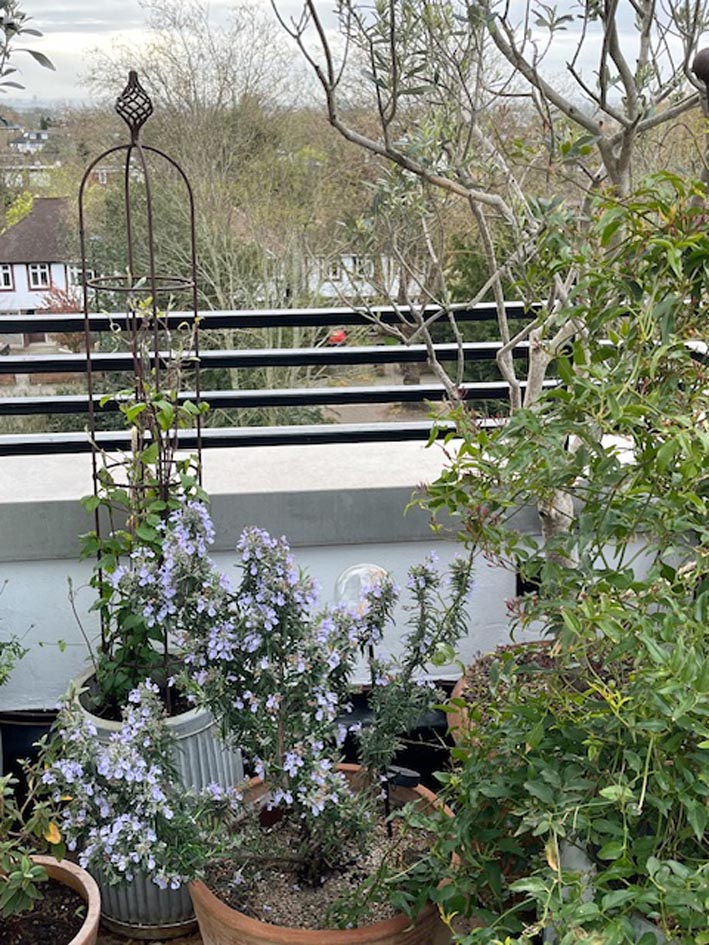 These ancient monuments are endangered and can themselves be a hazard and a danger. The grinding noise of tree-surgeons, as well as their diversion signs to protect passing traffic, have been very frequent features of the last year or so, which has meant we now have a view which extends much further into the distance; the North Surrey Hills being a particular treat, as well as the high rise blocks in central Croydon, interesting but less immediately appealing. The expanse of green at the city edge is ever more visible, as tall trees are felled and vistas open up – hopefully more often in the service of safety but probably to make way for building projects too.
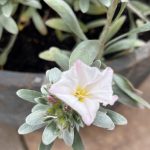
After one nearby decrepit tree was felled, presumably to avoid a major accident or injuries to passers by including school children in the adjacent playground, driving down the hill towards our gateway meant the building was more exposed and the balcony too clearly visible, with tufts of evergreen and silvery green leaves peering above the brick and stone parapet, and occasional gaps evident when the leaves of the deciduous plants dropped as the colder, shorter days approached.
To my eye the silvery greenery offers an attractive distraction from the rather utilitarian top floor which was constructed where once the top storey of a former Edwardian red-brick secondary school was to be found. This was set alight by an incendiary bomb early in the second world war. The building was renovated as part of a much later conversion, unadorned on the outside, comfortable and attractive from the inside as quirky ceiling features followed the multifaceted roof above. The original top storey and roof were a wonder of conical features and stone work, but the more recently contructed terrace was required to comply with weight restraints and regulations for access. On the terrace, as with life, you can’t have everything. More recently the green ‘hedge’ above the brick surround, comprising larger trees and shrubs which have grown up and thickened out to act as a partial wind break, providing privacy and seclusion as well as a destination for visiting birds, have come under scrutiny.
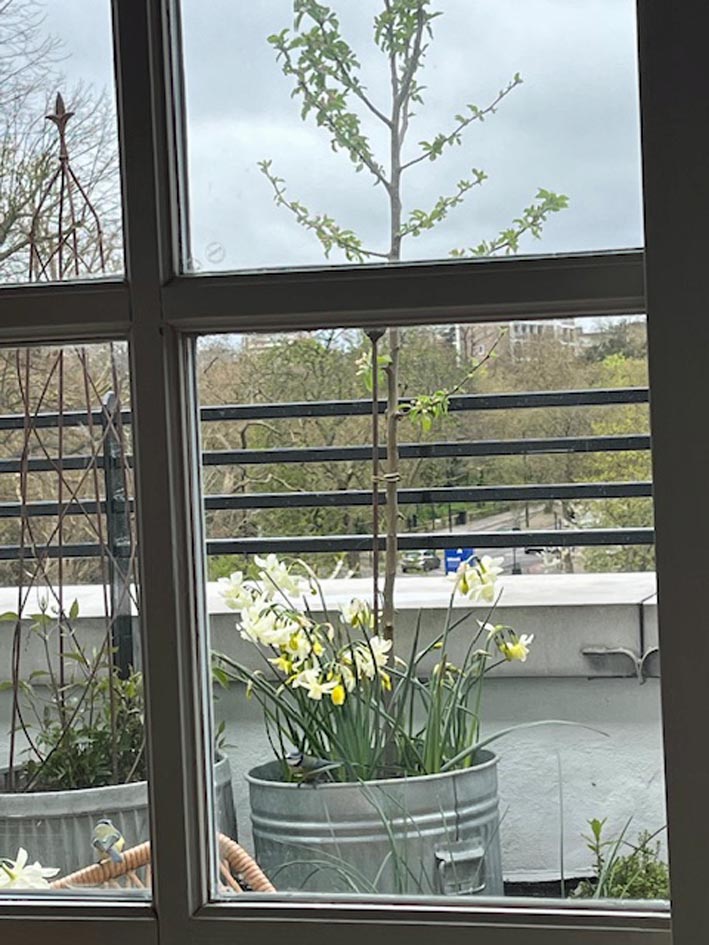 The olive trees whilst particularly popular with flocks of blue tits which feast on any Autumn olive fruit, as well as solitary robins which ferret for worms in the containers below, being nevertheless a cause for concern.
As the old adage cautions – ‘be careful what you wish for’.
Larger plants need larger containers which can also hold more water. Throughout two consecutive Winters we were subjected to exceptionally heavy and prolonged downpours, so the planters and containers filled up and the drainage holes got clogged up.
Surprisingly very few of the plants suffered in the long-run from being water-logged for weeks in cold, stagnant water. The olives and even the pomegranate thrived, and rosemary and eucalyptus happily put out new growth, but the weight of the plants and pots reached alarming levels – amounting to tons as calculated by a visiting builder. So systematically as Spring bulbs died down containers were removed and not re-planted, older troughs which had housed herbaceous and seasonal plants were de-commissioned and plants which had outgrown their habitats or were no longer enjoying high rise living were culled not to be replaced.
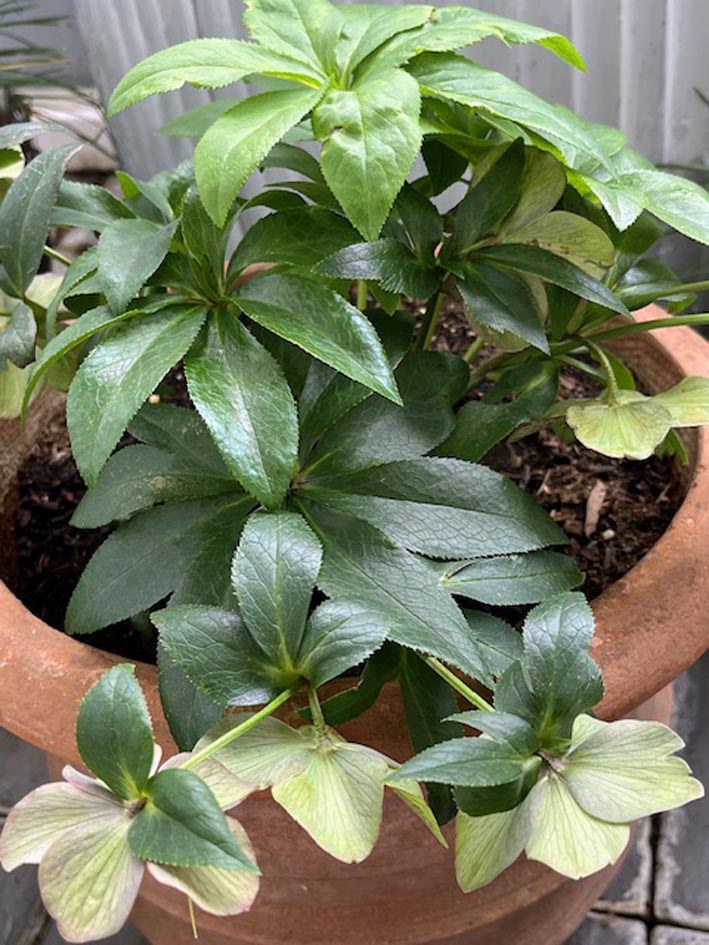 Some containers were re-located to the allotment and are happily housing strawberry plants or culinary herbs for visiting pollinators or grateful cooks, but all of this has involved a steely determination because although the permanent planting largely survived one way or another, the seasonal and ever changing smaller pots and pretty planters needed to be substantially reduced in number – partly like the large containers to reduce weight, and partly so that access across the wider upper level could go ahead more easily. So less pottering about and fiddling with different plant combinations and mini projects and more time to sit and enjoy the new arrangement; a space to be appreciated but not necessarily offering such horticultural fun.
Following On
Time has passed with various challenges aloft. Months of manouevering sodden planters subsequently took precedence over planting and planning ahead. Some plants and pots were rescued, others jettisoned, all with the central aim of reducing weight on the balcony and ensuring easier access – no more clambering out of sash windows to tend sprawling china roses. Instead the walkways were more or less cleared as required with fewer small, experimental pots on the main terrace (much loved by me, less so by others) thus reducing the number of trip hazards.
Much has been lost in the process. Including scented roses and Summer favourites, such as scabious and salvias.
For months any struggling plants were given a temporary home on the allotment and containers were housed with friends and family. For over four months, towards the tail end of last year, extensive essential external renovations were undertaken across the whole building with cherry pickers and scaffolding a constant feature, and a procession of renderers, welders, painters and window repairers requiring access to the balcony area. Larger plants that had survived the rains were squashed together in the centre of the balcony, so that there was adequate space for workmen with equipment to render walls or weld railings, for whom any plants were an understandably irritating obstacle.
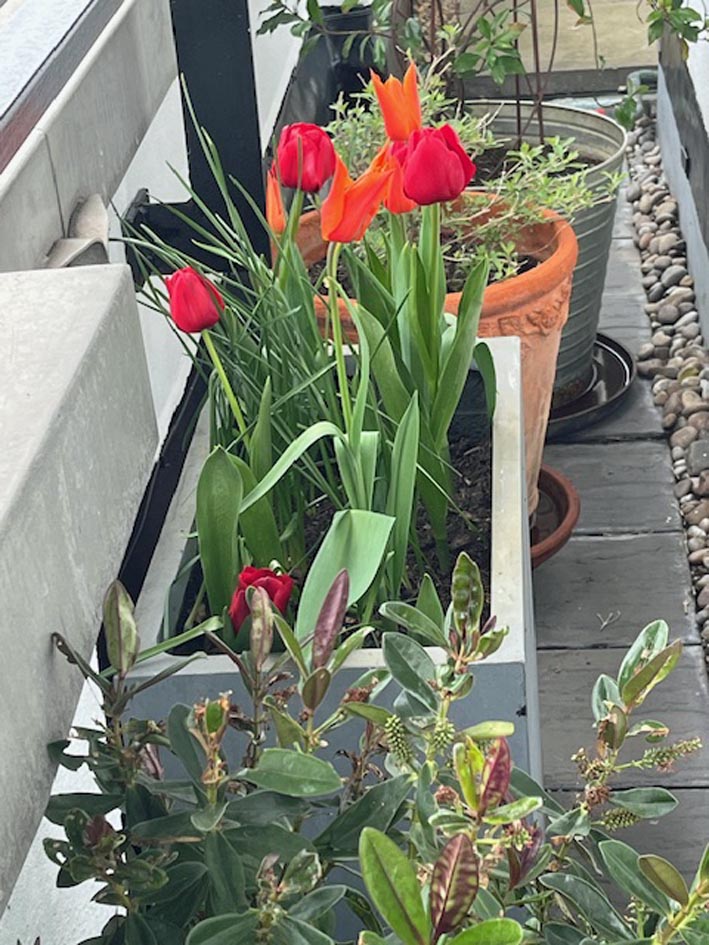 The contractors completed the works in early December last year when the short days and intermittant rain governed any thoughts of venturing out onto the balcony or gathering up the scattered plants and pots. But as the days lengthened plans for a seating area surrounded by larger plants against the perimeter wall, providing a wind break as well as habitat for insects and food for visiting birds and pollinators, came alive and have been gradually realised. Now with easier access for visitors who will hopefully linger awhile with a cup of coffee or glass of wine, and fewer plants needing personal attention, the balcony has undergone a transformation.
New Beginnings
Central to the Summer season is new seating. The old and much loved bench is now happily installed on the allotment and has been replaced with a selection of seats with all weather seat cushions as well as decorative cushions, kept in a nearby indoor cupboard, providing extra colour and comfort.
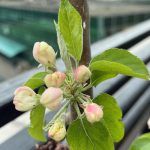
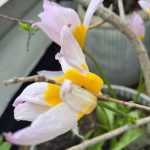
So far so good, with different table options (an old tile resting on an unused square container for example) and shade provided by the trees and a parasol, creating a tempting opportunity to enjoy the new outdoor space with its far reaching 270 degree views, before it’s lost as the tall trees surrounding us come into full leaf. From inside looking out, Spring bulbs and, blossom on the crab apple, as well as clematis in vigorous growth, have begun to create a very different garden space, and with the return of soliatry bees and other insects I have been smugly delighted.
However the best laid plans as so often have hit an unexpected snag.
Pigeons generally prefer the North side of our building, a converted Edwardian school, with other tall structures nearby. The South-side, our side, is much more open and lacks cover but nevertheless the allure of water in an old stone saucer, as well as potential sources of food, has attracted their interest together with marauding seagulls looking for nearby nests and young.
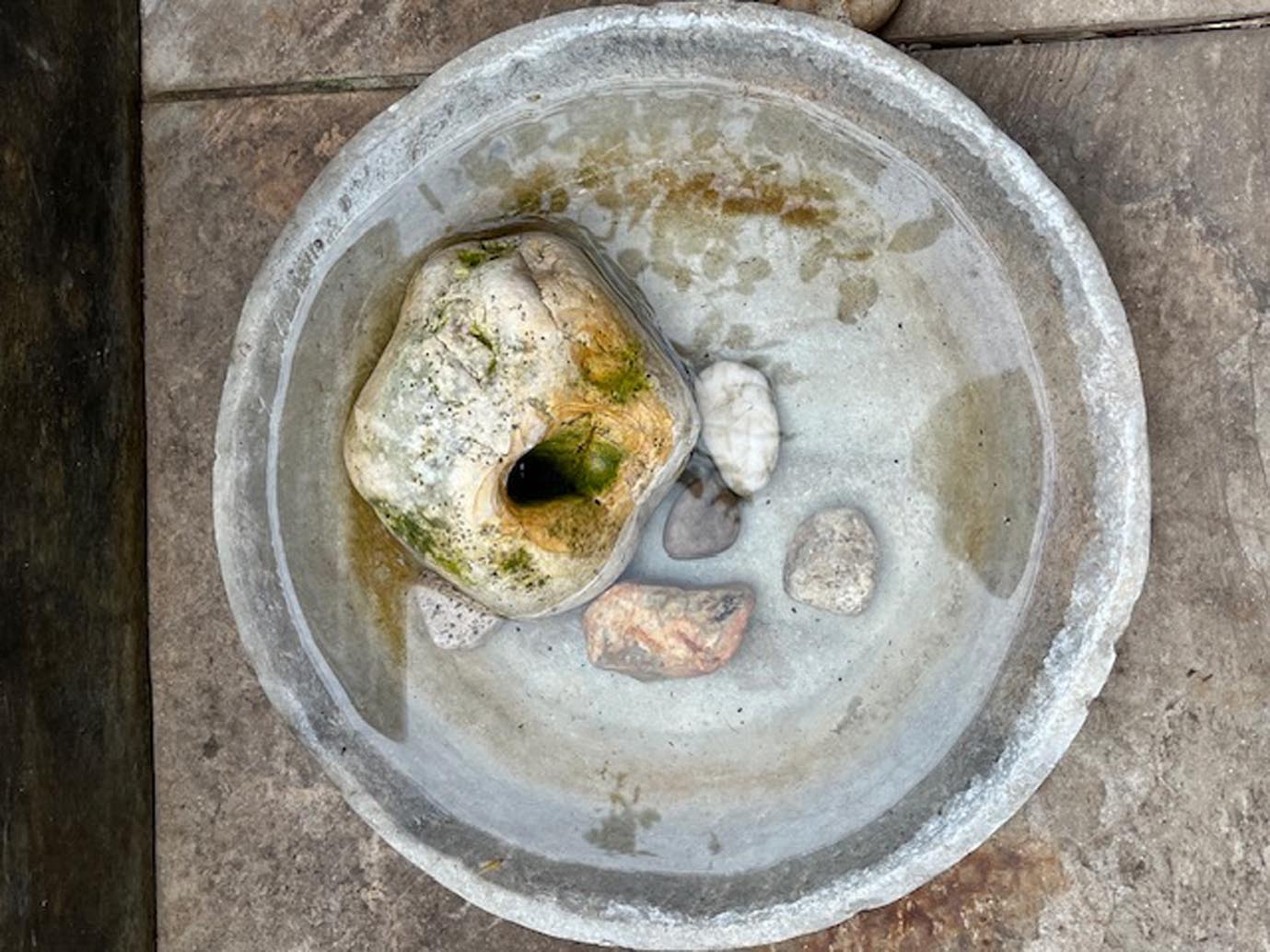 All of which is an unwelcome distraction, but since we effectively live under a pigeon coop, it comes inevitably with the familiar risk of droppings, not uncommon hereabouts on any convenient spot. So the weather proof seat cushions will join the decorative cushions and be housed indoors, and my efforts and attention will be focussed on the plants and pots, encouraging favoured wildlife including the occasional butterfly. Hopefully our presence on the balcony will deter the pigeons and magpies as well as aggresive seagulls and any other unwelcome visitors, while we are enjoying our treasured, limited, outdoor space.
More than the lack of plants, or the painful sight of struggling shrubs and dying replacements acquired prematurely when watering and basic care were still out of reach, I missed the insects and other signs of life and regeneration. I noticed with relief the first ‘weeds’ to appear between the tiles and now many months later the solitary bees are back, enormous queen bumble bees have emerged and our outdoor space is once again a minute and largely hidden part of London’s network of green corridors and interconnected gardens.